Approach
What we mean by end to end
An agent that answers a question is useful. An agent that takes the work from request to recorded result changes how a team runs.
· SeamlessWorks
Most automation helps with one step. A chatbot answers a question, a script fills in a form, a rule routes a ticket. The work itself still waits between steps, in queues and inboxes, until a person picks it up.
End to end, in plain terms
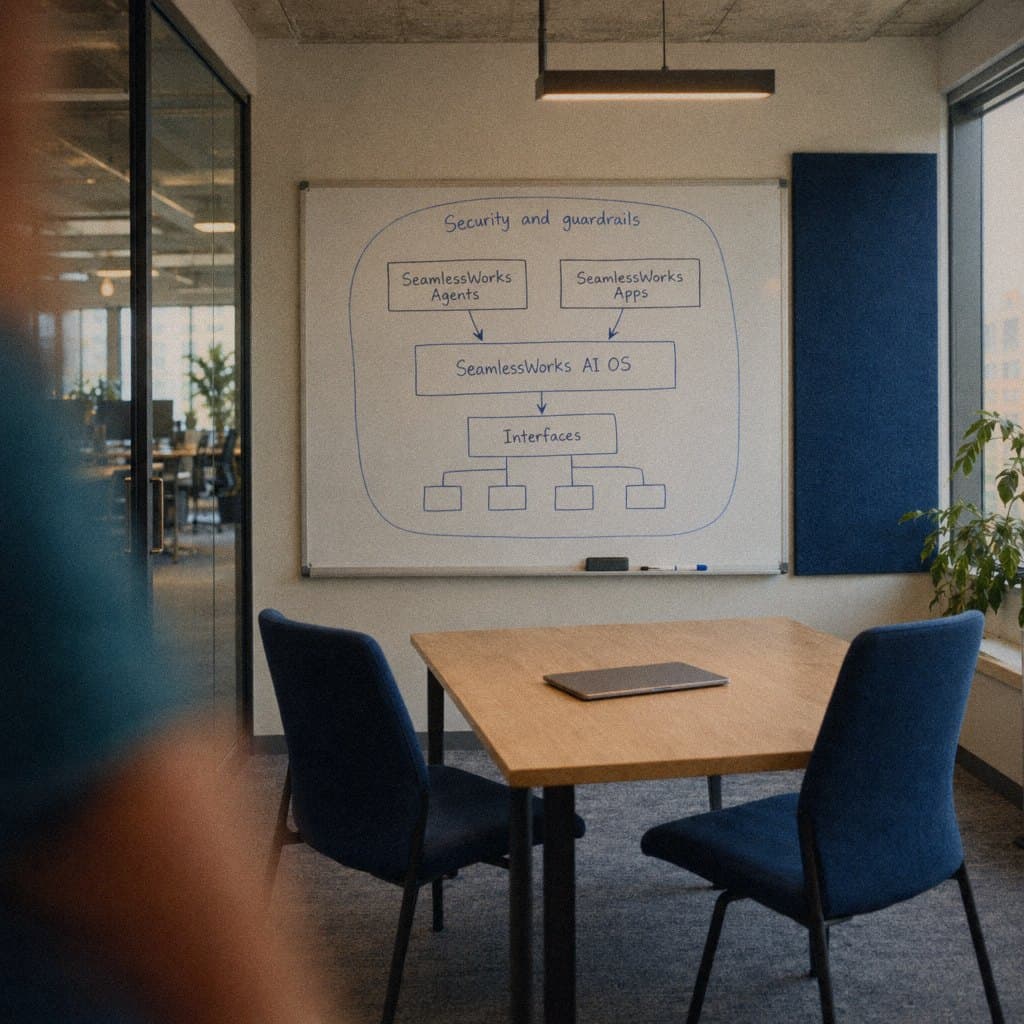
When we say a workflow is automated end to end, we mean an agent takes the work from the moment it arrives to the moment it is resolved and recorded. It reads what it needs from your systems, acts in them, tells the customer or colleague what happened and logs every step.
Take a customer who questions a high bill. Answering the question is only the start. End to end means the agent also finds the charge, applies the credit within your limits, confirms it with the customer and closes the case in your CRM.
Where people come in
End to end does not mean without people. You decide which actions need a person: a refund above a limit, an unusual claim, a vulnerable customer. The agent hands those over with the full case attached, and carries on once a person has decided.
Why it matters
Handoffs are where work slows down and mistakes creep in. Every time a case moves between teams or systems, someone has to pick it up and work out where it stands. An agent that runs the whole workflow removes those handoffs, and the record shows exactly what happened at every step.